



Hair transplant recovery time: what to expect in the UK

Dr Harpreet Kalra • August 5, 2026

Hair transplant recovery time: what to expect in the UK

Hair transplant recovery time follows a predictable pattern for most patients: the initial healing window runs from day 0 to about two weeks, many people return to desk-based work within around one to two weeks, and full maturation of the final result takes up to 18 months. NHS guidance confirms this two-phase structure, and it applies whether you have undergone Follicular Unit Extraction (FUE) or Follicular Unit Transplantation (FUT).

The first two weeks are the most clinically significant. Grafts are fragile, particularly in the first 2–5 days, and the actions you take during this window directly affect how many follicles survive. After that, the process becomes one of patience rather than vigilance.

Key milestones at a glance:

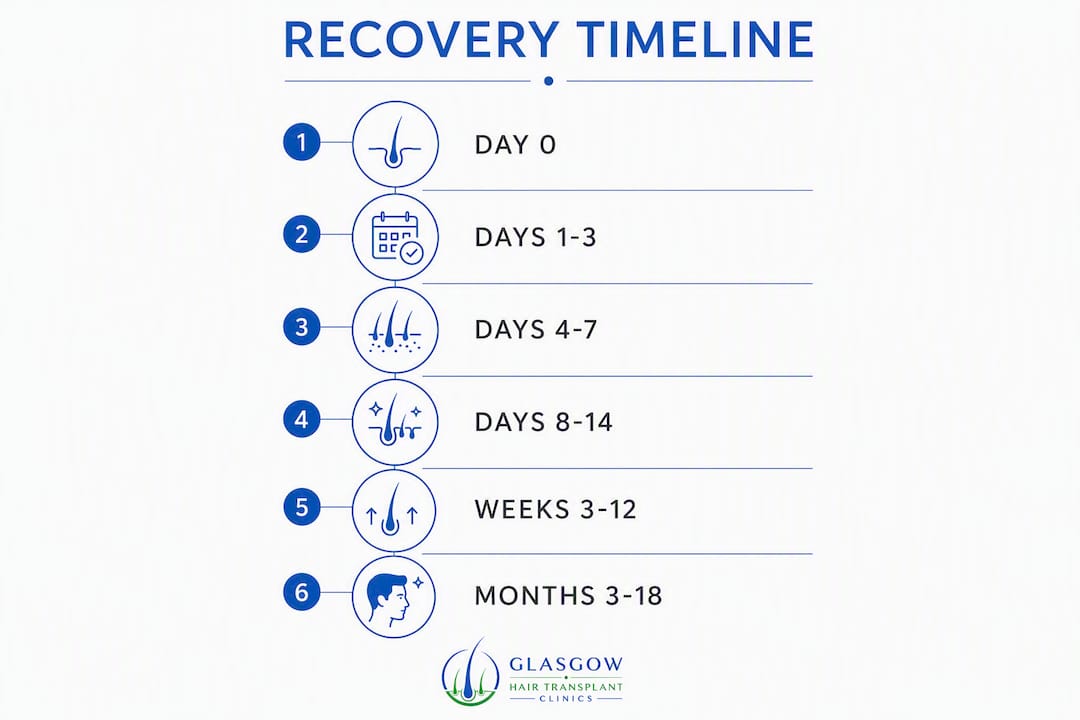
  • Days 0–14: Initial healing; grafts are vulnerable, scabs form and subside, swelling peaks around days 2–3
  • Weeks 2–8: Shock loss (shedding) is normal and expected; this is not graft failure
  • Months 3–4: First visible regrowth appears for most patients
  • Month 6: Substantial cosmetic improvement for the majority
  • Months 12–18: Final maturation; full density and natural texture established

Stitches, if non-dissolvable, are typically removed around day 10–14. Gentle washing is usually permitted from around day 6 under surgeon instruction, in line with NHS and specialist UK guidance. Your follow-up schedule with your surgeon is not optional; it is the mechanism by which graft security and early complications are monitored.

Pro Tip: Before you leave the clinic on procedure day, confirm the exact date of your first follow-up appointment and ask for the aftercare instructions in writing. Having both removes ambiguity during the most critical recovery window.


Table of Contents

What happens each day in the first two weeks of recovery

The immediate post-operative period is where most patients have the most questions, and where the most important decisions are made.

Day 0: procedure day

You will leave the clinic with a light dressing over the donor area. The recipient site (where grafts were placed) is usually left open or covered with a loose bandage depending on your surgeon’s protocol. Pain is typically mild to moderate and well managed with standard analgesics prescribed before you leave. Sleep with your head elevated at roughly 45 degrees using a travel pillow or wedge; this reduces swelling around the forehead and eyes. Arrange a lift home rather than driving yourself, as post-procedure medication can affect concentration.

Days 1–3: swelling, exudate and early crust formation

Swelling peaks around days 2–3 and may track down to the forehead and around the eyes. This is a normal inflammatory response, not a sign of infection. A small amount of serous (clear or slightly yellow) fluid around the graft sites is expected. Resist any urge to touch or pick at the recipient area; even gentle contact can dislodge a graft at this stage. Continue prescribed pain relief as directed and keep the head elevated when resting.

Days 4–7: managing scabs and the first gentle wash

Scabs begin forming over each graft site. Research on graft anchoring shows that grafts pulled in the first two days are easily dislodged, but by day 6 pulling no longer dislodged grafts in the cited study. This is why most UK clinics permit the first gentle hand wash around day 6, using a mild, pH-balanced shampoo applied with the fingertips in soft circular motions. No rubbing, no jets of water directly on the scalp.

  • Avoid physical work, bending forward, or any activity that raises blood pressure
  • Keep the scalp away from dusty or dirty environments
  • Do not wear tight-fitting hats or helmets that press on the recipient area
  • Use any post-operative spray provided by your clinic as instructed

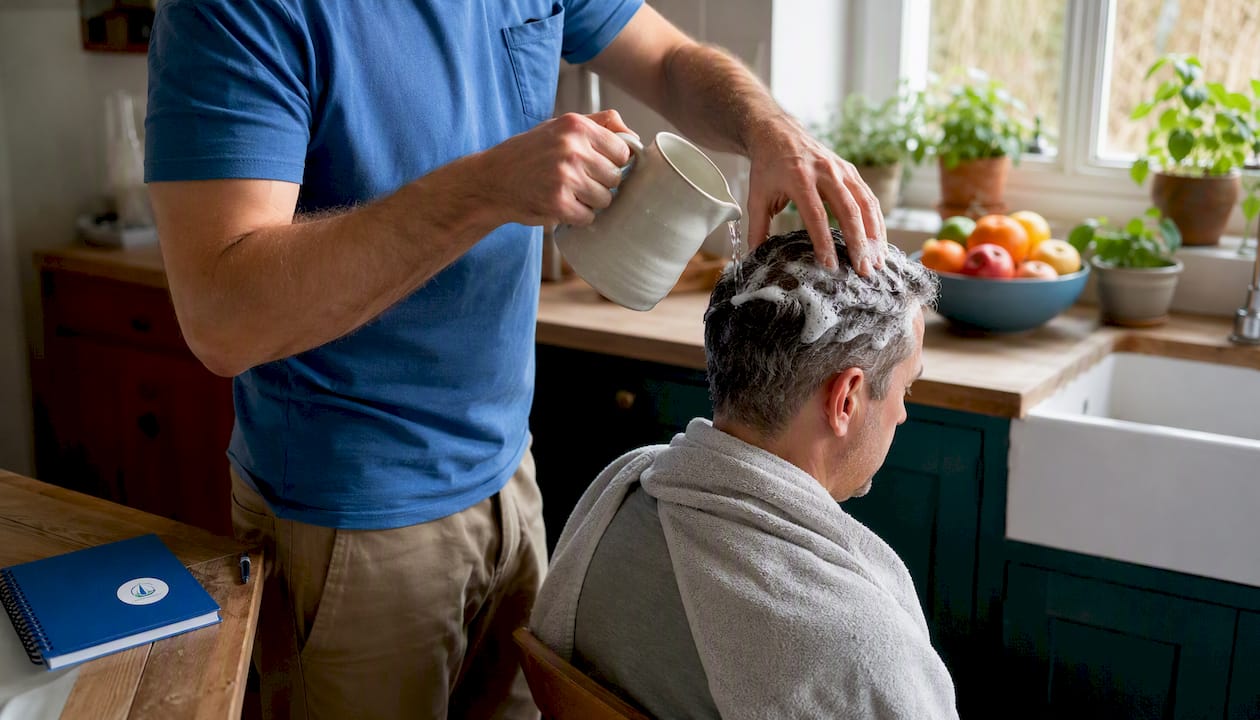
Pro Tip: When washing for the first time, dilute a small amount of shampoo in a cup of lukewarm water and pour it gently over the scalp rather than applying product directly. This reduces the mechanical force on graft sites.

Days 8–14: scab shedding and graft security

By day 9, graft anchoring research indicates grafts are no longer at significant risk of displacement. Scabs typically begin to loosen and shed naturally during this window; do not force them. Non-dissolvable stitches in the donor area are removed around day 10–14 at a clinic appointment. Most patients with desk-based roles return to work somewhere in this window, once scabs are less visible and comfort allows.

A British patient information leaflet notes that scabs can persist for up to two weeks and advises avoiding strenuous physical activity and dusty or dirty environments throughout the first week. Keep your follow-up appointment; this is when your surgeon assesses graft take and answers questions about what you are seeing.


Weeks 3–12: shock loss, shedding and the first signs of new growth

Around two to eight weeks after the procedure, most patients notice the transplanted hairs beginning to shed. This is called shock loss or telogen effluvium, and it is a normal part of the hair cycle response to surgical trauma. The follicle itself remains intact beneath the scalp; only the hair shaft is shed.

Shock loss versus graft failure

The distinction matters. Shock loss involves the hair shaft falling out while the follicle survives and will regrow. Graft failure means the follicle itself has not survived, usually due to poor blood supply, infection, or physical dislodgement in the early days. Signs that warrant a call to your clinic include:

  • No regrowth at all by month 4–5 in areas where growth was expected
  • Persistent redness, swelling or discharge at graft sites beyond the first two weeks
  • Patchy areas that remain completely bare while surrounding grafts are growing

The Glasgow Hair Transplant Clinics shedding guide explains the difference in detail and is worth reviewing if you are unsure what you are seeing.

Early regrowth: what to expect

Fine vellus hairs typically emerge from months 3–4. They are soft, sometimes colourless initially, and thinner than the final shaft will be. This is not the finished result; it is the beginning of a maturation process that continues for over a year. Variability between patients is significant: some see early growth at 10 weeks, others not until month 5.

Pro Tip: Take a photograph of the recipient area every four weeks from week two onwards. Comparing month 3 to month 6 side by side is far more reassuring than trying to judge daily change by eye.

Practical measures that support early growth include staying well hydrated, maintaining adequate protein intake, and following any prescribed medical therapy your surgeon has recommended, such as minoxidil or finasteride. Photographic follow-ups at your clinic, typically scheduled at months 3, 6 and 12, provide objective evidence of progress and allow your surgeon to identify any areas that may benefit from additional treatment.


Months 3–18: regrowth milestones and what a final result looks like

The long-term healing timeline is where patience becomes the primary requirement. NHS guidance places full maturation at 10–18 months, and UK cosmetic surgery standards require that follow-up continues throughout this period.

Month 3–4

Visible growth begins for most patients, though the hairs remain thin and the density looks sparse. This is the stage where many patients feel most uncertain; the shedding phase is over but the result is not yet apparent. Reassurance from your surgeon at a scheduled review is valuable here.

Month 6

Substantial cosmetic improvement is evident for the majority of patients by this point. Density has increased, the hair shaft has thickened, and most patients can style their hair to cover any remaining thin areas. This is often the milestone at which patients feel confident enough to return to their normal social and professional routines without self-consciousness.

Months 9–12

Continued thickening and improved texture mean that styling options expand. By month 12, the result is close to final for most patients, though some follicles continue maturing.

Months 12–18: final maturation

Full density and natural texture are typically established by 18 months. The hair transplant timeline at Glasgowhairtransplantclinics maps these milestones clearly and is a useful reference throughout your recovery.

Factors that influence your individual timeline:

  • Age: Younger patients often heal faster, though ongoing hair loss may require future sessions
  • Smoking: Reduces blood supply to follicles and can impair graft take
  • Medical conditions: Diabetes, autoimmune conditions and thyroid disorders can slow healing
  • Donor quality: Finer or lower-density donor hair produces a different result than coarser, dense donor hair
  • Adherence to aftercare: Patients who follow post-operative instructions consistently tend to see better outcomes


Common side effects, warning signs and when to get medical help

Most side effects after a hair transplant are self-limiting and resolve within the first two weeks. Knowing which symptoms are expected and which require prompt attention reduces anxiety and prevents complications from being missed.

Expected side effects

  • Scabbing at graft sites, lasting up to two weeks
  • Mild to moderate pain or discomfort, managed with prescribed analgesics
  • Swelling of the forehead and around the eyes, peaking at days 2–3
  • Temporary numbness or altered sensation in the recipient or donor area
  • Redness at both sites, fading over 1–2 weeks
  • Itching as scabs resolve (do not scratch)

Less common complications

Infection occurs in a minority of cases and is typically managed with a short course of antibiotics. Folliculitis (small pustules around graft sites) can appear weeks after the procedure and usually resolves with topical or oral treatment. Poor graft take, resulting in lower-than-expected density, may be addressed with a further planned session once the initial result has fully matured.

Red flags: contact your clinic or GP promptly if you experience

  • Increasing pain rather than improving pain after day 3
  • Spreading redness, warmth or swelling beyond the immediate graft area
  • Pus or thick discharge from graft sites
  • Fever above 38°C
  • Grafts visibly separating or lifting from the scalp

Photographic records of your scalp from the early days make clinical review significantly more straightforward. Your clinic should have a triage contact number; use it rather than waiting for a scheduled appointment if you are concerned.


Practical aftercare: washing, sleeping, exercise, work and sun exposure

The Glasgow Hair Transplant Clinics aftercare guide sets out stepwise washing instructions and post-operative sprays that support graft take. The principles below reflect standard UK clinic practice.

Washing

Gentle hand washing with a mild shampoo is typically permitted from around day 6 under surgeon instruction. Use lukewarm water, apply product with the fingertips only, and rinse by pouring water over the scalp rather than directing a shower jet at it. Vigorous rubbing, scratching or towel-drying the recipient area should be avoided until grafts are fully secure, generally after day 14.

Sleeping

Keep the head elevated for the first 7–10 days to reduce swelling. A travel pillow placed around the neck prevents the head from rolling onto the recipient area during sleep. Satin or silk pillowcases reduce friction if the donor area is in contact with the pillow.

Exercise and physical activity

Avoid any exercise that raises your heart rate significantly for the first two weeks. Heavy lifting, running, contact sports and gym sessions should be paused for at least 2–4 weeks depending on your clinic’s specific guidance. Sweat introduces bacteria to open graft sites and elevated blood pressure increases the risk of bleeding and graft displacement.

Work and travel

Patients with desk-based roles typically return to work within 5–14 days. Physical or outdoor roles that involve dust, dirt or manual labour require a longer absence. Flying is generally safe but plan your post-operative medications and sprays for carry-on luggage, and avoid long-haul flights in the first week if possible.

Sun exposure and swimming

Direct sun on the recipient area should be avoided for at least four weeks. Once grafts are secure, a broad-spectrum SPF 30+ sunscreen protects the scalp. Chlorinated pools and open water swimming should be avoided for a minimum of four weeks due to infection risk.

Pro Tip: A loose-fitting, clean cotton hat can protect the scalp outdoors once grafts are secure (usually after day 14), but avoid anything that sits tightly on the recipient area before that point.


What NHS, BAPRAS and UK standards say about graft security

BAPRAS guidance is clear that surgical steps must be performed by a GMC-registered doctor, and that donor hair is a finite resource requiring careful planning at consultation. The General Medical Council ( GMC) maintains the register of licensed practitioners; checking your surgeon’s registration before proceeding is straightforward and advisable.

The two-phase recovery model described by the NHS (initial healing approximately 14 days; growth phase up to 18 months) reflects the biological reality of graft anchoring. In the first 2–5 days, grafts sit in recipient sites without a blood supply and are held only by surface tension and early fibrin clotting. Research published on graft anchoring found that by day 6 pulling no longer dislodged grafts, and by day 9 grafts were no longer at significant risk. Crust formation prolongs the vulnerable window; frequent gentle irrigation in the first 24–48 hours can reduce crusting and therefore shorten the period of risk.

Graft security window: Research indicates grafts are highly vulnerable in the first 2–5 days and are generally secure by around day 9. This is the scientific basis for every early aftercare instruction your clinic gives you.

UK cosmetic surgery standards require that aftercare instructions are documented and that follow-up continues until results have fully matured, up to 18 months post-procedure. CQC and HIS registration of the clinic, combined with GMC registration of the operating surgeon, are the minimum credentials to verify before booking any procedure in the UK.

Practical implications of the anchoring science:

  • Do not touch the recipient area in the first five days under any circumstances
  • Begin gentle irrigation only when your surgeon instructs, typically around day 6
  • Avoid any activity that risks physical contact with the scalp (hats, headrests, pillows pressing on grafts) for the first two weeks
  • Attend every scheduled follow-up; graft security cannot be assessed by the patient alone


Key takeaways

Hair transplant recovery time follows a well-established two-phase pattern: grafts are most vulnerable in the first 14 days, and final results take up to 18 months to fully mature.

Point Details
Fragile graft window Grafts are at highest risk in days 0–14; by day 9 they are generally secure according to anchoring research.
Return-to-work window Most patients with desk-based roles return to work within 5–14 days, depending on scab visibility and job demands.
Shedding is normal Shock loss typically occurs in weeks 2–8 and does not indicate graft failure; the follicle remains intact.
Final results timeline Substantial improvement is visible by month 6; full maturation is usually complete by 12–18 months.
Glasgowhairtransplantclinics Provides structured aftercare, photographic follow-ups and GMC-registered surgeons at CQC/HIS-registered clinics across the UK.

What the recovery timeline really tells you about choosing a clinic

Most articles about hair transplant recovery focus on what happens to the scalp. The more useful question is what the recovery timeline reveals about the quality of the procedure and the clinic behind it.

A well-executed FUE procedure by a GMC-registered surgeon, performed at a CQC or HIS-registered facility, should produce predictable recovery milestones. Scabs resolve within two weeks. Shock loss occurs and resolves. Growth begins at months 3–4 and matures by 18 months. When recovery deviates significantly from this pattern, the cause is almost always traceable to one of three things: inadequate graft handling, poor aftercare compliance, or a procedure performed outside regulated standards.

The patients who struggle most during recovery are rarely those with the most complex hair loss. They are the ones who were not given clear aftercare instructions, who did not know what shock loss was before it happened, or who had no follow-up contact number to call when they were worried. That is a clinic governance failure, not a biological one.

Ongoing management of native hair matters too. A transplant addresses the grafted area; it does not halt progressive hair loss elsewhere. UK clinic practice increasingly emphasises that long-term success depends on managing existing hair alongside the transplanted follicles, which may include medical therapies or planned future sessions. Patients who understand this from the outset have more realistic expectations and better long-term outcomes.

The recovery timeline, in other words, is not just a schedule. It is a test of whether the clinic prepared you properly.


How Glasgowhairtransplantclinics supports you through every stage of recovery

Knowing the timeline is one thing; having structured clinical support through it is another. Glasgowhairtransplantclinics offers patients a complete aftercare pathway from procedure day through to final maturation, delivered at CQC and HIS-registered clinics by GMC-registered surgeons across Glasgow, Newcastle and other UK locations.

Every patient receives documented aftercare instructions, post-operative sprays and stepwise washing guidance. Photographic follow-ups at months 3, 6 and 12 provide objective evidence of progress and allow the clinical team to identify any areas of concern early. Same-site nursing support, prescription management and a direct advice line mean you are not navigating the recovery period alone.

Consultations are free, available online or face to face, and include donor assessment, medical history review and a realistic discussion of expected outcomes before any treatment is recommended. To see hair transplant costs or to find your nearest clinic and book a consultation, visit the clinic locations page.

This article provides general information about hair transplant recovery and is not a substitute for personalised medical advice. Confirm your specific aftercare plan and any clinical concerns with your GMC-registered surgeon or GP.


Useful sources and further reading

The following authoritative UK sources provide official guidance, clinical standards and patient information for anyone seeking additional detail on hair transplant recovery.

  • NHS: Hair transplant — The primary NHS patient information page covering the procedure, recovery timeline (initial healing 14 days; maturation up to 18 months) and return-to-work guidance. The most accessible starting point for UK patients.
  • BAPRAS: Hair transplant surgery — The British Association of Plastic, Reconstructive and Aesthetic Surgeons’ patient guide; covers surgeon credentials, donor planning and what to expect from a regulated procedure.
  • Glasgowhairtransplantclinics: aftercare guide — Stepwise washing instructions, post-operative spray guidance and follow-up scheduling from the clinic’s own patient resources.

Recommended

Hair Transplant Recovery: A Clear Week-by-Week Guide

The scalp usually looks most obviously treated during the first fortnight. Healing then gives way to shedding, a quiet phase and gradual growth. The dates are useful guides, but your written instructions from Dr Kalra take priority because FUE and FUT wounds are not managed in exactly the same way.

Man recovering after a head procedure
Clinic certifications
General Medical CouncilInternational Society of Hair Restoration SurgeryInformation Commissioner's Office
Published
5 August 2026
Updated
4 September 2026

Recovery has two separate meanings. The first is wound healing: redness, tenderness, crusts and swelling settling after surgery. The second is cosmetic recovery: the transplanted hair shedding, starting a new growth cycle and gradually becoming long and thick enough to change the way the scalp looks. The first is measured in days and weeks. The second takes months.

This distinction prevents a common misunderstanding. A scalp can be healed enough for normal daily life long before the transplanted follicles have produced a visible result. Equally, a patient can look tidy after ten days and still need to protect the scalp in the way their surgeon has advised.

Hair transplant recovery timeline

Procedure day

Redness, pinpoint crusting and tenderness are common, and the donor area may be dressed. Travel home safely, keep the recipient area away from contact and follow the instructions supplied for the first night.

Days 1–3

Crusts become clearer and swelling can move towards the forehead or around the eyes. Do not rub, scratch or press the grafts. Use only the sprays and medicines you were instructed to use.

Days 4–7

The donor area starts to settle, although the recipient area can still look red and scabbed. Begin washing only on the date and with the method set out in your written aftercare plan.

Days 8–14

Crusts usually loosen and the scalp begins to look less obviously treated. Do not pick persistent crusts. FUT patients may still have a wound or sutures that need review.

Weeks 2–8

Many transplanted shafts shed, so the scalp can look similar to or temporarily thinner than it did before surgery. Shedding a shaft is different from losing the transplanted follicle. Contact the clinic if you are unsure.

Months 3–4

Early hairs may begin to appear and can look fine or uneven. It is too soon to judge density because different follicles enter growth at different times.

Months 6–9

Coverage becomes easier to assess as more hairs emerge and the earlier growth gains calibre. Consistent progress photographs are more useful than checking for a change every day.

Months 12–18

Most scalp results mature through this period, although crown work can take longer than frontal work. The final review should consider growth, density, the donor area's appearance and any continuing native hair loss.

The NHS hair-transplant guidance also separates early recovery from the much longer period needed for a result to develop. No online calendar can tell an individual patient that a symptom is normal. When something does not match the instructions you were given, contact the treating clinic.

The first 24 hours and first fortnight

The first night

The recipient area contains newly placed grafts and should not be pressed against a pillow, headrest, clothing or a tight hat. Sleep in the position advised by the clinic. Some patients are told to keep the head elevated to help with swelling, but the exact duration should come from the written plan rather than a generic internet timetable.

Do not drive if medication, tiredness or the effects of the procedure could impair you. Arrange transport before treatment day. A small amount of spotting from the donor area can occur, but persistent bleeding needs advice.

Days 1 to 3

Redness, tenderness, small crusts and a tight feeling can occur. Swelling may appear on the forehead and sometimes around the eyes. That can be part of normal early healing, but rapidly increasing swelling, breathing difficulty or an allergic-type reaction is not something to watch at home.

Use saline spray, shampoo, pain relief or other medicines only as directed. Routine antibiotics are not required for every patient, so the article does not treat them as a standard part of recovery. If they have been prescribed for you, follow the label and the clinician's instructions.

Washing and crusts

Clinics use different washing protocols. Some begin a gentle wash within the first few days; others use a different schedule. Start on the date Dr Kalra gives you. The consistent principles are low pressure, clean hands, lukewarm water and no scratching or forceful rubbing of the recipient area while it is healing.

Crusts normally loosen as the scalp is washed. Pulling them away early can also pull on hair shafts and irritate the skin. If crusting remains after the date by which you were told it should have cleared, ask the clinic for instructions instead of increasing pressure yourself. The detailed Belfast hair transplant aftercare guide explains the clinic's approach.

Does FUE recover faster than FUT?

Both methods create a recipient area containing implanted grafts, so early care of that area is similar. The difference is at the back of the scalp.

FUE removes follicular units through many small circular incisions distributed across the donor region. It avoids one continuous linear wound, but it is not scarless. Tenderness, small crusts and temporary redness can occur where the units were removed.

FUT removes a narrow donor strip and closes the area as a linear wound. The donor site can feel tighter or sorer and may need suture care or removal, depending on the closure used. Returning to strenuous exercise can also be more conservative because tension across the healing wound matters.

The procedure name alone does not set your return-to-work date. The size of the operation, the job you do, the amount of swelling and your own healing response all affect it.

Shedding, the quiet phase and new growth

Many patients shed some or much of the visible transplanted hair during the early weeks, but not everybody sheds in the same way. During the usual post-transplant shedding phase, the visible shaft is released while the transplanted follicle remains beneath the skin.

This can be unsettling because the hair may look better immediately after surgery and then appear thinner again. It does not provide an early measurement of the final result. Read the clinic's separate guide to hair-transplant shedding and shock loss for the difference between shaft shedding, native-hair shock loss and donor overharvesting.

The next stage is often visually quiet. Early growth commonly becomes noticeable from around the third or fourth month, although timing varies. New hairs can be fine, wiry or uneven at first. More useful cosmetic change develops as additional follicles start growing and the earlier hairs become longer and thicker.

Frontal and hairline work is often easier to judge earlier than a broad crown transplant. The crown covers a larger circular surface and follows a whorl, so maturation can extend towards the later end of the 12-to-18-month range.

Work, exercise, hats, travel and haircuts

Returning to work

A desk-based job and a dusty, physical job are not equivalent. Some patients feel able to work from home within a few days, although redness and crusting may remain visible. Manual work, protective headwear, heat, dust and a raised heart rate can justify more time away. Plan leave around the actual role, not an average quoted online.

Gym and sport

Exercise restrictions protect against bleeding, friction and accidental impact during early healing. Light walking and heavy lifting do not carry the same risk. Contact sport, heading a football and helmets add another layer because the scalp can be struck or compressed. Resume each activity only when the clinic clears it. This is particularly relevant to players trying to fit surgery between seasons.

Hats and helmets

A hat is only useful if it does not touch or drag across the recipient area. Tight caps, hard hats and sports helmets should wait until the grafts and skin are ready. Ask the clinic to look at the type of headwear you need for work if returning depends on it.

Travel and sun

Arrange the first review before booking long or complicated travel. Keep any allowed aftercare products accessible and protect the scalp from direct sun in the way you were advised. Do not apply a product to healing grafts simply because it is marketed as gentle; confirm when sunscreen or styling products can restart.

Haircuts

The donor and recipient areas can be ready for trimming at different times. Clippers introduce contact and vibration, while scissors can be used without running a guard across the skin. Ask which area can be cut, with which tool and from what date.

What is expected, and when should you call?

Early redness, crusts, mild tenderness, itching, temporary altered sensation and some swelling can occur after hair-transplant surgery. They should generally move in the right direction. A change that is becoming worse rather than settling deserves attention.

Contact the treating clinic promptly if you have increasing pain, persistent bleeding, spreading redness or heat, thick discharge, a fever, rapidly increasing swelling, a wound opening or any symptom that concerns you. Seek urgent medical help for severe symptoms such as breathing difficulty, collapse or a serious allergic reaction.

Do not start leftover antibiotics, steroid cream or another person's medication. Photographs can help the clinical team assess a visible change, but they do not replace an examination when one is needed.

Recovery is not the same as preventing future hair loss

A transplant moves selected donor follicles. It does not stop untreated native hair elsewhere from thinning. A technically successful result can therefore look less complete later if the surrounding pattern progresses. That is why the consultation should consider the donor supply, the likely future pattern and whether non-surgical management is appropriate.

Progress photographs should use the same lighting, distance, hair length and angle. Comparing a wet, harshly lit month-three image with a styled month-six image creates a misleading impression in either direction. The clinic's full recovery and growth timeline and patient results provide further context.

Hair transplant recovery FAQs

How long does a hair transplant take to heal?

The most visible early healing usually occurs during the first one to two weeks. That does not mean the result is complete. Growth and maturation continue for roughly 12 to 18 months, with individual variation.

When can I wash my hair?

Use the start date and method in your written aftercare instructions. Protocols vary, so a universal day quoted online should not override the advice from the team that performed your procedure.

Is transplanted-hair shedding normal?

Many patients shed visible transplanted shafts during the early weeks. The amount varies and not every patient follows the same pattern. If shedding is accompanied by worsening inflammation, discharge or another concerning symptom, contact the clinic.

When can I return to the gym?

That depends on the activity, the donor method and how the scalp is healing. Walking, heavy weights, swimming and contact sport should not be treated as one category. Follow the staged return supplied by the clinic.

When will I see the final result?

Early growth often becomes visible after several months. Meaningful change tends to build through the middle of the first year, and maturation may continue to 12–18 months. Crown procedures can sit towards the longer end.

Should FUE have no scars?

No. FUE avoids the single linear donor scar associated with FUT, but every extraction makes a small incision. The visibility of healed marks depends on punch size, skin response, extraction pattern, donor density and hair length.

Further reading

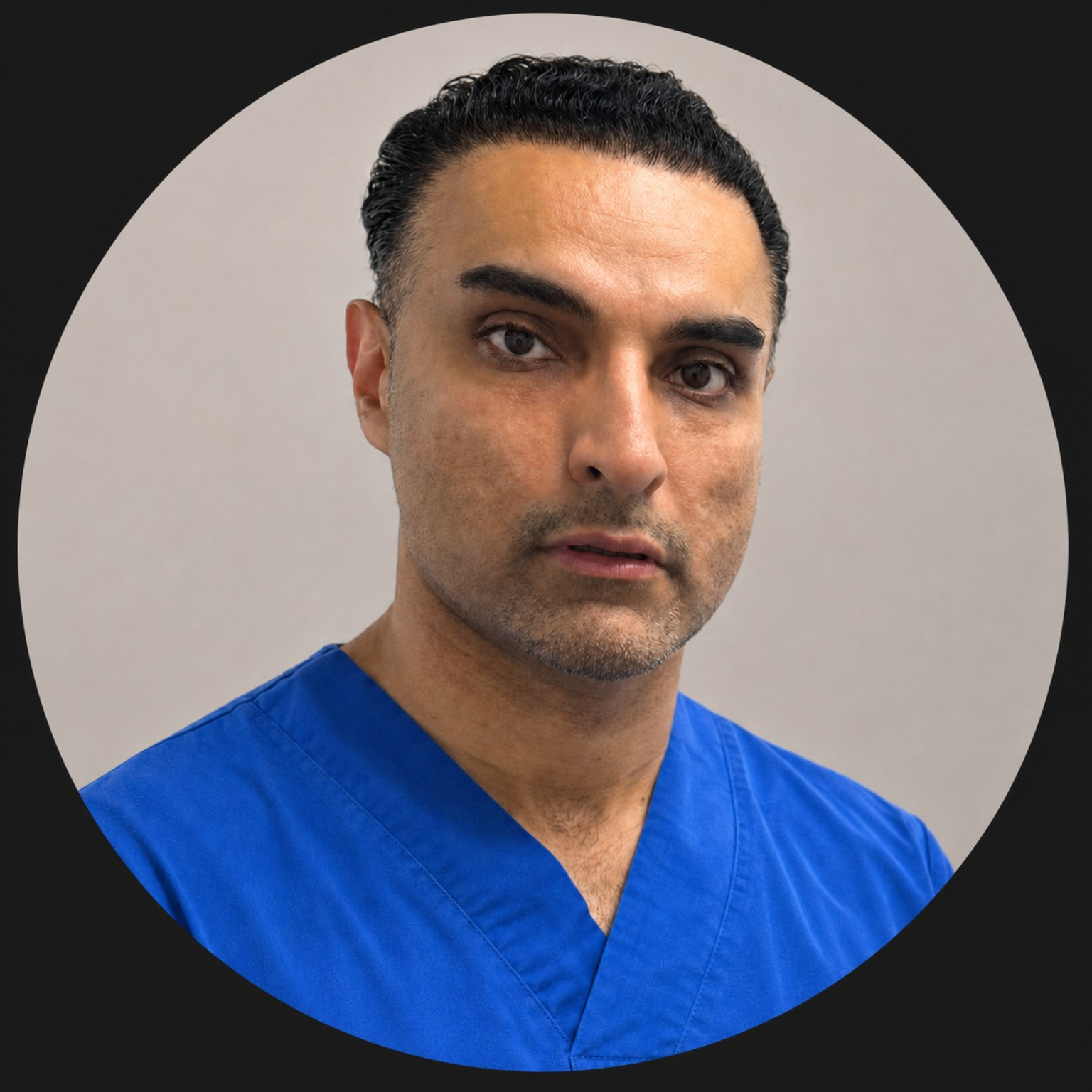
Dr Harpreet Kalra

About Dr Harpreet Kalra

Dr Harpreet Kalra is a practising GP and hair-transplant surgeon at Belfast Hair Transplant. He assesses the cause and pattern of hair loss, donor-area suitability and the longer-term plan before surgery is recommended. GMC reference 7126076.

Plan recovery before choosing a treatment date

Discuss your work, sport, travel and aftercare commitments with the Belfast team so the recovery plan fits your procedure and daily life.

Book a Free Consultation
A grey scoop filled with white creatine monohydrate powder
By Dr Harpreet Kalra September 7, 2026
Does creatine cause hair loss? Read what the 2009 study and 2025 trial found, their limits, and what to do if your hair is thinning.
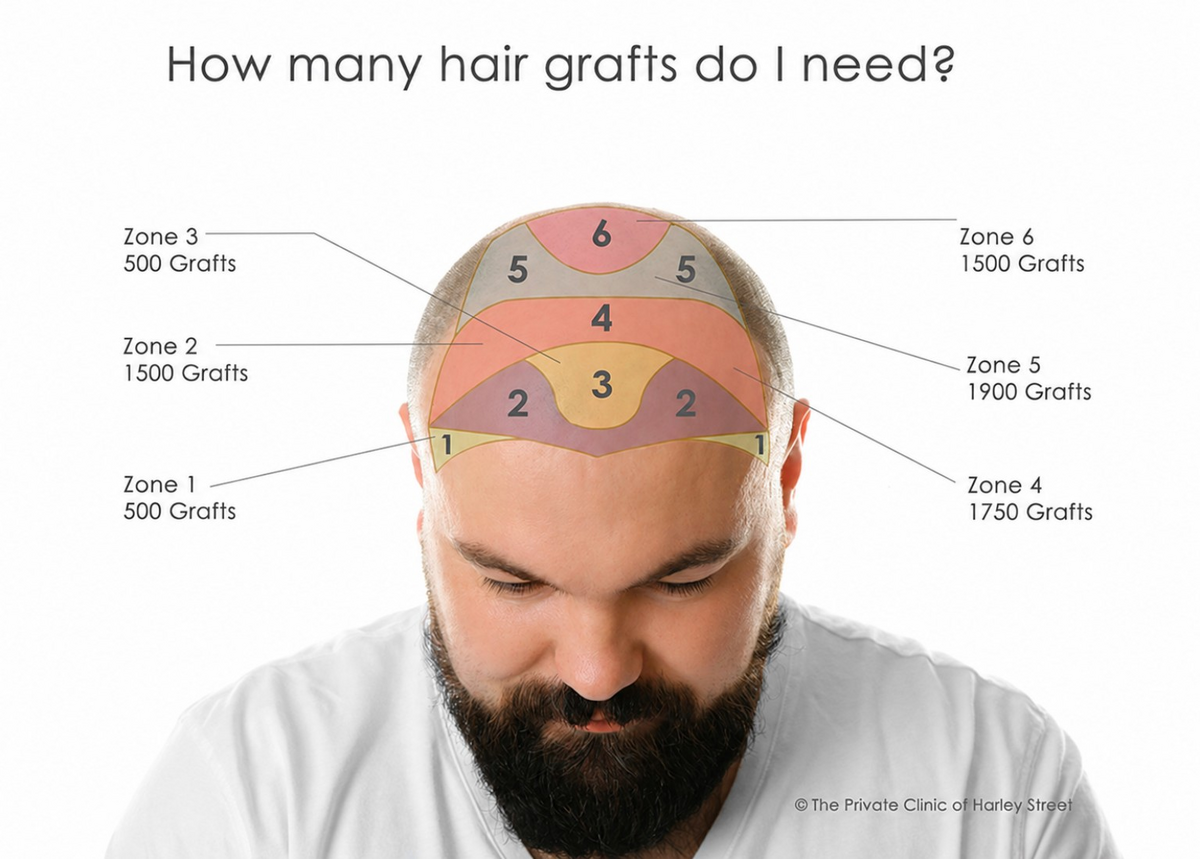
Hair transplant graft-zone diagram showing estimated graft counts for the hairline, mid-scalp and crown areas.
By Dr Harpreet Kalra September 4, 2026
Typical graft ranges for the hairline, crown and advanced loss, with donor density, coverage and long-term planning explained clearly.
Footballers playing a competitive match on a grass pitch
By Dr Harpreet Kalra September 4, 2026
Confirmed cases, widely reported names and practical lessons Belfast patients can take from footballers who have addressed hair loss.
By Dr Harpreet Kalra August 8, 2026
Can finasteride help preserve native hair after a transplant? Read the UK evidence, timing, side effects and current MHRA safety advice before treatment.
By Dr Harpreet Kalra August 6, 2026
See current FUE prices from £1,999 for 500 grafts, what changes your quote, what aftercare includes and how to compare UK clinics safely.
By Dr Harpreet Kalra August 4, 2026
Compare 2026 hair transplant costs quoted in Newcastle and elsewhere in the UK, including graft pricing, travel, clinic regulation and what a consultation should confirm.
By Dr Harpreet Kalra August 3, 2026
Compare FUE and FUT hair transplants in Belfast: extraction, scars, shaving, recovery, graft planning and which patients may suit each method.
By Dr Harpreet Kalra August 2, 2026
Compare Belfast hair transplant prices, graft bands, FUE, DHI and FUT costs, finance considerations and the questions to ask before accepting a quote.
By Dr Harpreet Kalra August 1, 2026
Compare hair transplant finance options, deposits, interest, affordability checks and total repayment costs before agreeing to fund treatment.
By Dr Harpreet Kalra July 31, 2026
Understand common causes of hair loss in men, including pattern loss, shedding and scalp conditions, and when to speak to a GP or hair-loss specialist.
Show More