Hair shedding in the shower: what is normal?
What everyday shedding means, when a change needs assessment and how to wash your hair gently.

Published: 11 October 2026
Updated: 11 October 2026
Contents
- How much shedding is normal?
- What happens during the hair cycle?
- Telogen effluvium: shedding after an earlier trigger
- Other changes that need a different assessment
- Hair shedding and hair breakage are not identical
- What to bring to a GP appointment
- What can you do while waiting for assessment?
- When medication or surgery might enter the discussion
- Questions and answers
- UK sources
A collection of hair in the shower can look alarming, especially when you have only recently started noticing it. Some shedding is a normal part of the hair cycle. The question is whether something has changed for you: the amount you notice, the appearance of your scalp, the pattern of loss or accompanying symptoms.
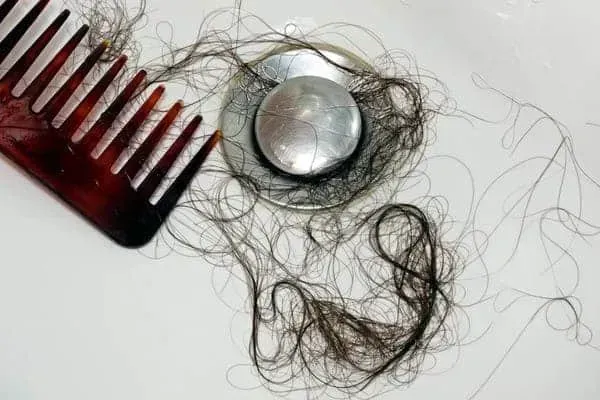
There is no reliable diagnosis to be made from a photograph of a plughole. This guide explains which observations are useful, why increased shedding can follow an earlier event and when to seek advice. Our wider hair loss advice can help you prepare for an assessment.
How much shedding is normal?
The NHS hair loss information gives a usual daily figure of around 50–100 hairs. That is general background, not a number you must collect and count, and it does not all have to appear during a shower. Hairs are also noticed on clothing, pillows and brushes.
A single wash is therefore a poor test. The appearance of a clump also changes with hair length and how the strands collect together. A new bare patch or a progressively widening parting is worth describing even if the number of loose hairs does not seem large. Conversely, noticing strands during washing does not alone prove that your follicles are being permanently lost.
Compare the overall pattern with your usual experience. Note whether the change is sudden or gradual and whether it appears across the scalp or in one area. You do not need to make repeated daily measurements before asking for help.
What happens during the hair cycle?
Individual hairs move through growth, transition and resting phases. Shedding a hair is not the same as losing the entire follicle: the follicle is the structure in the skin that produces hair. That distinction is important when reading claims that washing “pulls out follicles”.
During ordinary washing, rinsing and detangling, loose hairs become particularly visible. The fact that you first noticed them in the shower does not establish that the shower caused the underlying change. Consider the wider history before blaming water temperature, a new bottle of shampoo or one particular wash.
A useful description might be: “I have noticed increased shedding for six weeks, including on my brush, and my ponytail feels less full.” That gives a clinician more information than “my shampoo is making me bald”, which assumes an explanation before the scalp has been examined.
Telogen effluvium: shedding after an earlier trigger
Telogen effluvium is one cause of increased, usually widespread shedding. The British Association of Dermatologists guidance explains that disruption of the hair cycle can produce shedding about three months after a trigger. Examples include illness, an operation, childbirth, major stress or marked weight loss. The interval means the relevant event may not be something that happened this week.
Tell the clinician about the preceding months, including changes in medicines and diet. Sometimes a clear cause is not found. Telogen effluvium is not simply another name for all hair loss, and a suspected trigger does not remove the need to consider other explanations.
When telogen effluvium is diagnosed, shedding often settles over several months, while recovery of volume can take longer. Underlying problems may need treatment. Persistent shedding should be reviewed, particularly if it lasts beyond six months, the pattern changes or the original explanation no longer seems to fit.
Other changes that need a different assessment
Gradual recession at the temples, thinning at the crown or a widening parting may suggest a different pattern from sudden diffuse shedding. A distinct patch, eyebrow change or an uncomfortable scalp also changes the questions a clinician needs to ask. More than one condition can exist at the same time.
Try to describe the location and progression without choosing a diagnosis yourself. Mention whether relatives have a similar pattern, whether the scalp has symptoms and whether you have previous photographs. Do not dismiss a new patch because you recently had a stressful period, or assume that all thinning is inherited because it runs in the family.
Our hair loss treatment guide outlines the range of approaches that may be discussed after assessment. The options depend on the cause. A treatment intended for pattern hair loss is not automatically the right response to a short episode of increased shedding.
Hair shedding and hair breakage are not identical
Breakage affects the hair shaft. Shorter broken pieces, changes after bleaching or repeated heat styling, and tangles that lead to forceful brushing are worth mentioning. They raise a different question from a gradual change in the density of hair growing from the scalp.
Be gentle with detangling and drying, and avoid repeatedly pulling the hair to test how much comes away. Tight styles, vigorous brushing and frequent heat or chemical treatments deserve review if the hair feels fragile. These practical changes can reduce avoidable damage, but they are not a substitute for investigating a changing hairline or unexplained shedding.
If a product makes the scalp sting, itch or feel sore, keep the packaging and ask for advice. Record whether the symptom appeared after shampoo, conditioner, dye or another scalp treatment. Price and “natural” branding do not establish that a formulation will suit you.
What to bring to a GP appointment
The NHS advises seeing a GP to understand the cause before paying a commercial clinic for treatment. Take a brief timeline, a medicine and supplement list, and any photographs that show the change. Mention recent illness, surgery, weight change or other health symptoms rather than discussing the hair in isolation.
The clinician may examine the scalp and decide whether tests are appropriate. In suspected telogen effluvium, investigations can include checks for iron deficiency or thyroid problems when relevant. Testing should answer a clinical question; buying a broad set of private tests does not itself identify the cause.
Ask what the findings suggest, what remains uncertain and when to review the situation. If a treatment or change of routine is recommended, write down the intended goal and follow-up point. That makes the next appointment more useful than starting again with a list of products you have tried.
What can you do while waiting for assessment?
Keep hair care manageable and comfortable. Avoid harsh handling and tell a pharmacist or GP if washing is painful or a product appears to trigger a reaction. An elaborate routine that makes the scalp uncomfortable is not a better routine simply because it contains more “hair growth” products.
Keep eating regularly and mention restrictive diets or significant weight change at the appointment. Do not start high-dose supplements on the assumption that hair shedding always means a deficiency. Likewise, do not abruptly stop a prescribed medicine because hair loss appears in an online discussion. Ask the prescriber to review the possible connection and the alternatives.
If you want to record progress, take occasional comparable photographs of the parting, temples or area of concern. Use similar lighting and positioning. Repeatedly checking the drain or photographing the scalp many times a day can add worry without giving a clearer clinical picture.
When medication or surgery might enter the discussion
A diagnosis should come before a treatment package. Where a relevant condition is identified, hair loss medication may be discussed with an appropriate prescriber. Ask about expected benefit, suitability, side effects, monitoring and what happens if treatment is stopped.
A hair transplant is not the routine answer to a new episode of diffuse shedding. Surgical planning requires assessment of the cause, the likely future course and the donor hair. It should not be presented as the automatic next step because a shampoo or supplement has not resolved the concern.
If you are already recovering from surgery, a different context applies. Our guide to transplant shedding and shock loss discusses that subject. Tell the surgical team when the procedure took place and what has changed; general advice about everyday shedding cannot confirm that an individual recovery is progressing normally.
Follow the team's washing instructions and review our aftercare guide for background. New or worsening scalp symptoms should be discussed with the team rather than managed by adding products without advice.
Questions and answers
Does a large clump mean permanent hair loss?
No conclusion about permanence can be drawn from the clump alone. The time course, scalp examination and changes in coverage matter. Seek assessment if the change is substantial, persistent or worrying, especially if there are patches or scalp symptoms.
Can an illness months ago be relevant?
Yes. Increased shedding can follow an earlier disruption to the hair cycle. Include the preceding months when describing your health history. Do not assume the cause must be something that happened immediately before the first shower in which you noticed it.
Should I stop washing to keep the hair in?
Avoiding washing does not explain the cause of shedding. Ask about adapting your routine if the scalp is irritated, and avoid the particular product suspected of causing symptoms while obtaining advice. Do not treat ordinary cleansing as a test of whether the follicles are healthy.
How soon should I expect improvement?
That depends on the diagnosis and any underlying issue. Agree a realistic review point with the clinician. Less shedding and a return of hair volume are different milestones, so ask which change is expected first and what would prompt reassessment.
What if I am very worried even though the change looks small?
Tell the clinician how the concern is affecting you. Distress, avoidance of social situations or repeated checking deserves attention alongside the scalp findings. You do not need to wait for a large bald area before asking for support.