


Noticing a receding hairline in your twenties can be unsettling, but it does not tell you how quickly your hair will change or which treatment, if any, you need. Male pattern hair loss often develops slowly at the temples, across the top of the scalp or at the crown. Sudden shedding, smooth patches and a sore or inflamed scalp need a different assessment.
Before spending money on a product or procedure, establish what is causing the change. The NHS advises speaking with a GP about the cause of hair loss before approaching a commercial clinic. The clinic's guide to the types of alopecia also explains why pattern, speed and scalp symptoms matter.
First, work out what kind of hair loss it is
Male pattern hair loss, also called androgenetic alopecia, usually appears as frontal or temple recession, thinning over the top of the scalp or a gradually enlarging crown. Hairs in those areas become finer and shorter over time. The scalp itself generally looks healthy.
That familiar pattern should not be assumed when the change is abrupt or patchy. Arrange a medical assessment if the scalp is painful, red, scaly, pustular or visibly scarred, or if eyebrow, eyelash or body hair is also affected. The Primary Care Dermatology Society's alopecia overview explains why separating scarring from non-scarring loss is particularly important.
Recent illness, marked weight loss, iron deficiency, thyroid disease, medication and physical or emotional stress can be associated with diffuse shedding. A clinician can decide whether examination alone is sufficient or whether particular blood tests are justified. There is no standard blood test panel that every young man with thinning hair needs.
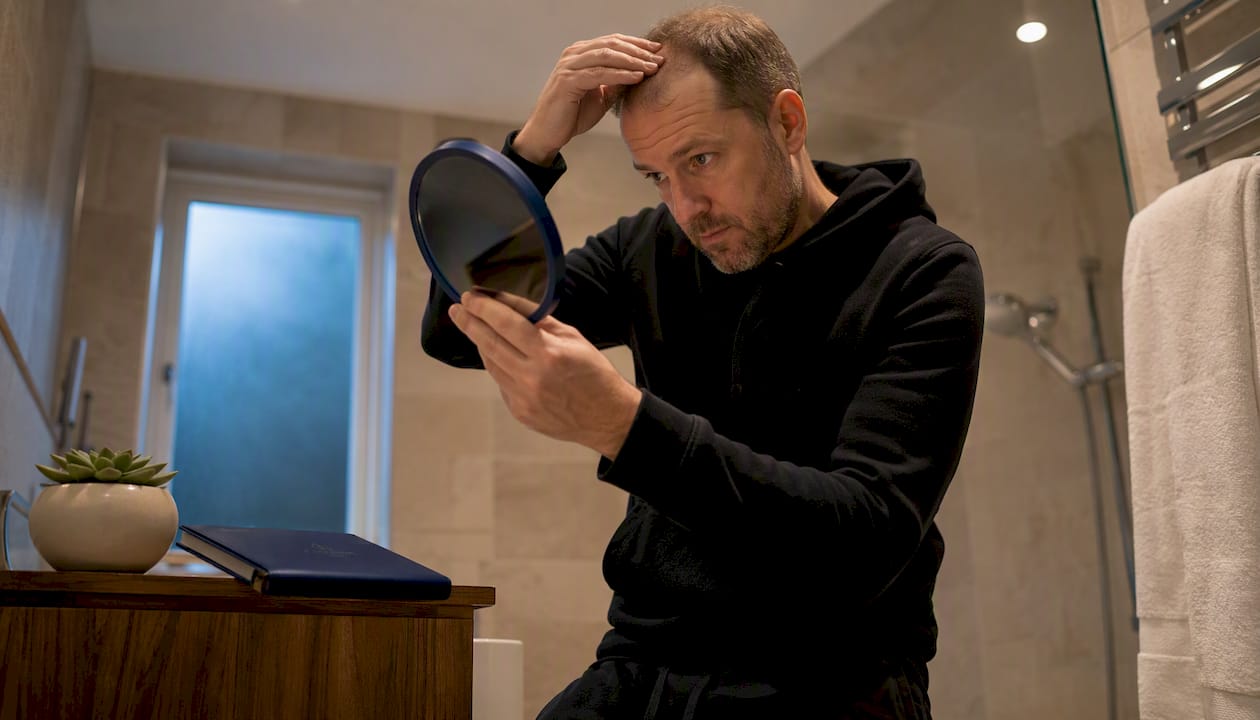
Monthly photographs taken with dry hair, consistent lighting and the same camera angles are more useful than repeatedly counting hairs in the shower. They can show whether a real pattern is developing and give a clinician a better record of its pace.
The two established medicines
The NHS lists finasteride and minoxidil as the main medicines used for male pattern baldness. Neither works for everyone, neither cures the underlying tendency, and any benefit usually depends on continued treatment. The practical commitment and the possible adverse effects deserve the same attention as the hoped-for result.
Finasteride
Finasteride 1 mg is a prescription medicine licensed for male pattern hair loss. It reduces the conversion of testosterone to dihydrotestosterone, or DHT, and can slow further loss or improve hair growth in some men. A prescriber should confirm that the pattern is appropriate, review medical history and current medicines, and explain the benefits and risks before treatment starts.
The MHRA's May 2026 finasteride advice warns about depression, suicidal thoughts and sexual dysfunction; sexual dysfunction has sometimes persisted after treatment stopped. Tell the prescriber about any history of depression or suicidal thoughts and keep the patient card and information leaflet supplied with the medicine.
If depression or suicidal thoughts develop while taking finasteride 1 mg, stop taking it and contact a healthcare professional as soon as possible. Call 999 if you feel at immediate risk of seriously harming yourself. Reduced sex drive, erectile dysfunction or ejaculation problems should also be reported to the prescribing clinician.
Topical minoxidil
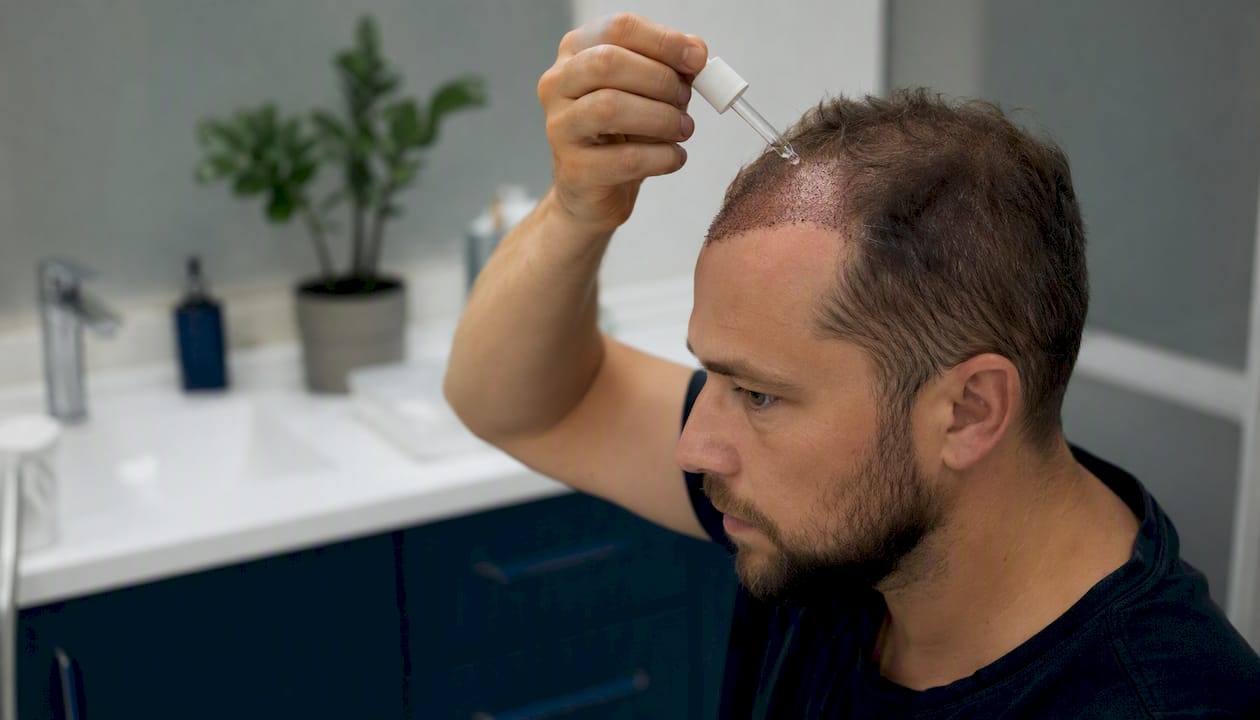
Licensed topical minoxidil products can slow male pattern hair loss or encourage growth in some men. Some are sold without prescription in the UK, but strengths, age limits and directions differ. Follow the leaflet supplied with the exact product rather than copying a dose from another website.
Minoxidil can cause dryness, redness, scaling or itching, and some users notice a temporary increase in shedding after starting. It normally takes several months to judge any benefit, which is lost after treatment is stopped. Do not apply it to a painful, inflamed or infected scalp, and have sudden, patchy or unexplained loss assessed first.
Finasteride and minoxidil act differently and may be discussed together, but a combination is not automatically right for every patient. Diagnosis, health history, adverse-effect risk and willingness to continue treatment all influence that decision. The clinic's hair-loss treatment overview compares medical, non-surgical and surgical routes.
What about supplements, PRP and devices?
Correcting a genuine nutritional deficiency can help the health problem responsible for shedding, but supplements do not reverse inherited pattern loss when no deficiency exists. High-dose supplements can also cause adverse effects or interfere with blood tests and medicines. A larger dose is not automatically safer or more useful.
PRP, microneedling and low-level light devices are sold privately. The British Association of Dermatologists' patient guidance describes the evidence for several of these approaches as limited or still developing, with unpredictable response. They should not be advertised as cures or used to postpone assessment of symptomatic or unusual hair loss.
When surgery enters the discussion
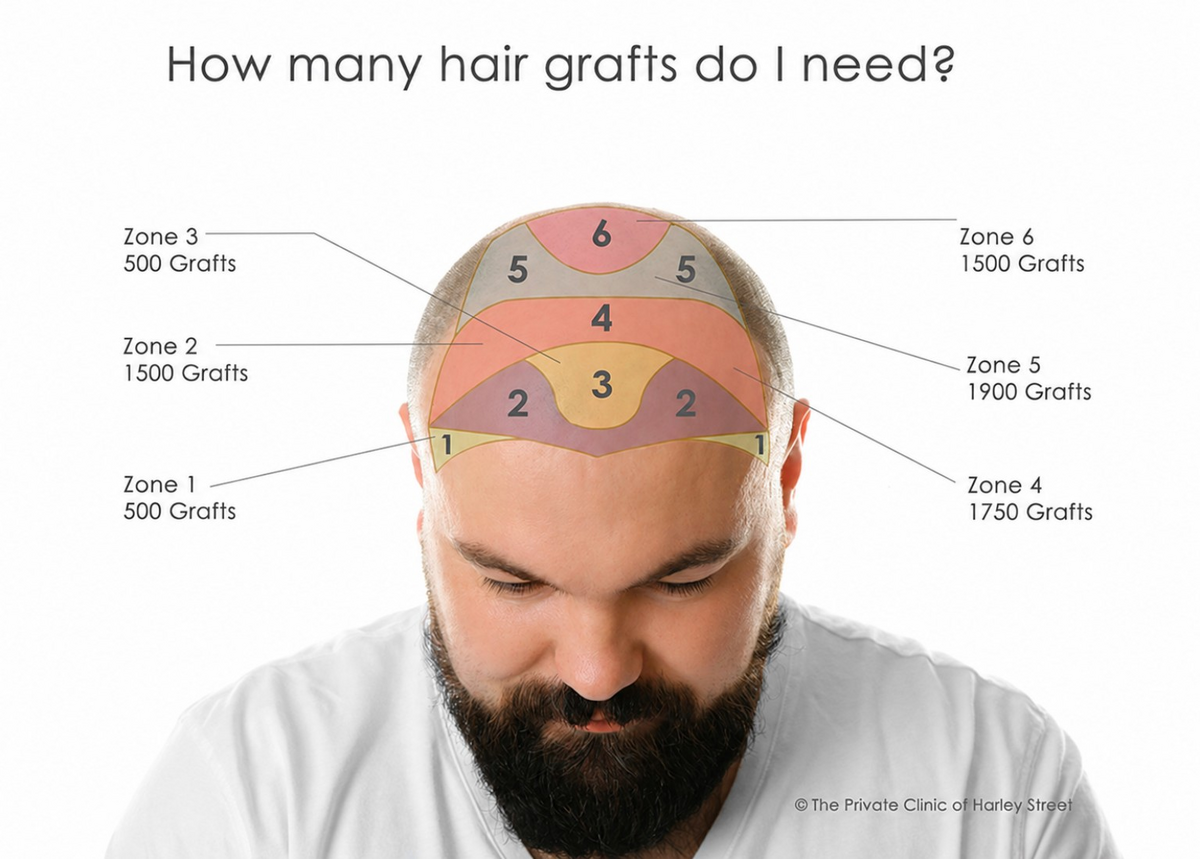
A hair transplant redistributes existing donor follicles; it does not prevent non-transplanted hair from continuing to thin. That limitation matters in a younger patient because the eventual pattern may not yet be clear and the donor supply is finite.
There is no single appropriate age for surgery. A useful assessment considers the diagnosis, rate of change, donor density, hair calibre, family pattern and the likely future demand on the donor area. A conservative hairline may age more naturally and preserve grafts better than a low design that could become isolated as surrounding hair recedes.
The NHS hair-transplant guide describes FUE and FUT as the two main ways donor grafts are obtained. DHI usually refers to the implantation stage, commonly using an implanter device after individual follicular units have been extracted. It is not a separate donor-harvesting method and does not guarantee a better result. The clinic's hair-transplant guides explain the terminology and planning considerations.
Choosing the next step
If loss is sudden, patchy, painful or inflamed, begin with a GP rather than a transplant consultation. For a gradual male pattern, take a short series of consistent photographs and discuss licensed treatment with a qualified prescriber. Prescription medicine should come from a regulated prescriber and pharmacy.
Surgery becomes a reasonable subject only after the cause, donor area and likely future loss have been assessed together. The right outcome may be medication, monitoring, a transplant plan or no treatment at all; a stage number or online photograph cannot make that decision on its own.
This article provides general information and cannot diagnose hair loss or determine whether a medicine or procedure is suitable for an individual reader.
About the author
Dr Harpreet Kalra is a GP and hair-transplant surgeon at Glasgow Hair Transplant Clinics. His consultations consider the diagnosis, donor area, existing hair and likely future pattern before treatment is discussed.