




Professional fitness does not prevent male-pattern hair loss. It is driven mainly by inherited follicle sensitivity to androgens, so footballers face the same changing hairlines and crowns as other men. The difference is that every change is photographed.
A haircut, hair fibres, lighting, medication, scalp micropigmentation or surgery can all change how a hairline looks. Photographs alone cannot identify the cause. The strongest evidence comes from the player's own account, a named clinic story or clear contemporary reporting.
Scottish footballers with documented hair transplants
James McFadden, Kris Boyd, Leigh Griffiths, Anthony Stokes and Pat Nevin have all been connected with treatment through first-person accounts, clinic material or contemporary reporting. Their individual stories are set out below. The published graft figures describe those procedures only; they are not estimates for another patient's hairline or donor area.
James McFadden
McFadden is one of the clearest Scottish examples because the procedure was reported at the time and he discussed it openly. The published accounts describe an FUE hair transplant of around 2,000 grafts. They also record him speaking about hair loss and the greater acceptance of treatment.
The useful lesson is not that 2,000 is the correct number for a former forward or for a Belfast patient. It is that a frontal result has to be considered alongside the hair that remains. Native hair can continue receding after transplanted follicles have been placed, so the original design and any ongoing plan matter years later.
Kris Boyd
Daily Record coverage from July 2015 reported that Boyd underwent FUE and received 1,762 grafts. The number is unusually specific, which makes it easy for readers to compare with their own estimate. That comparison is still limited. Hair calibre, forehead width, temple recession, hairline height and donor density can change the requirement substantially.
Leigh Griffiths and Anthony Stokes
Griffiths and Stokes were both associated with a Scottish hair-clinic campaign during their Celtic careers. Reports described Stokes having treatment first and Griffiths following. Their stories helped move the subject into ordinary football coverage instead of treating it as something hidden.
They also show the planning problem created by early surgery. A transplant can rebuild a selected area, but it does not stop susceptible native hair behind it from changing. A hairline designed at 23 has to make sense if the frontal third or crown becomes thinner later.
Pat Nevin
Nevin's published account differs because it identifies FUT strip surgery, not FUE. His clinic said he returned to television six days after treatment without the procedure being noticed. That is one patient's experience, not a standard return-to-work promise. Longer surrounding hair can conceal an FUT donor wound, but the linear scar and wound tension remain part of the decision.
Players commonly reported or discussed online
Barry Bannan, Steven Fletcher, Andy Webster and Colin Hendry all appear in articles and conversations about Scottish footballers with hair transplants. The visible changes that prompted those claims can be real. They are not the same as a reliable first-person statement, named clinic account or treatment record.
We have kept the names because they are part of the public search topic, but we are not presenting an appearance-based opinion as a medical fact. The same rule should apply to anybody analysing a player from television footage. A photograph cannot show whether a change came from surgery, medication, hair fibres, scalp pigmentation, styling or lighting.
Why Wayne Rooney belongs in the conversation
Wayne Rooney is English, not Scottish, but his 2011 public confirmation changed the British conversation around hair transplants. He announced the procedure himself at 25 and shared an early photograph. That direct account removed the need for speculation and made it easier for other players and supporters to speak openly.
Published reports commonly put his first procedure at around 1,000 grafts and describe later work as hair loss continued. His original announcement did not provide a graft count, so the figure should be treated as widely reported rather than a verified surgical record. The clinically useful point is the progression: transplanted hair and untreated native hair do not necessarily follow the same future course.
Rooney's original post remains available on his verified public account. His openness mattered more than the technique label because it separated confirmation from the tabloid guessing that surrounded many other public figures.
What footballers' hair transplants can teach Belfast patients
FUE suits many short hairstyles, but it is not scarless
Players commonly keep the back and sides short, which is one reason FUE is frequently chosen. It avoids the single linear scar produced by FUT. Each individual extraction still leaves a small circular healing site. Those marks can become visible with a very close shave, heavy extraction or a strong skin-to-hair contrast.
Someone choosing between methods should read the full FUE vs FUT comparison, not assume that the method used by a footballer is automatically right for them.
A celebrity graft count is not a calculator
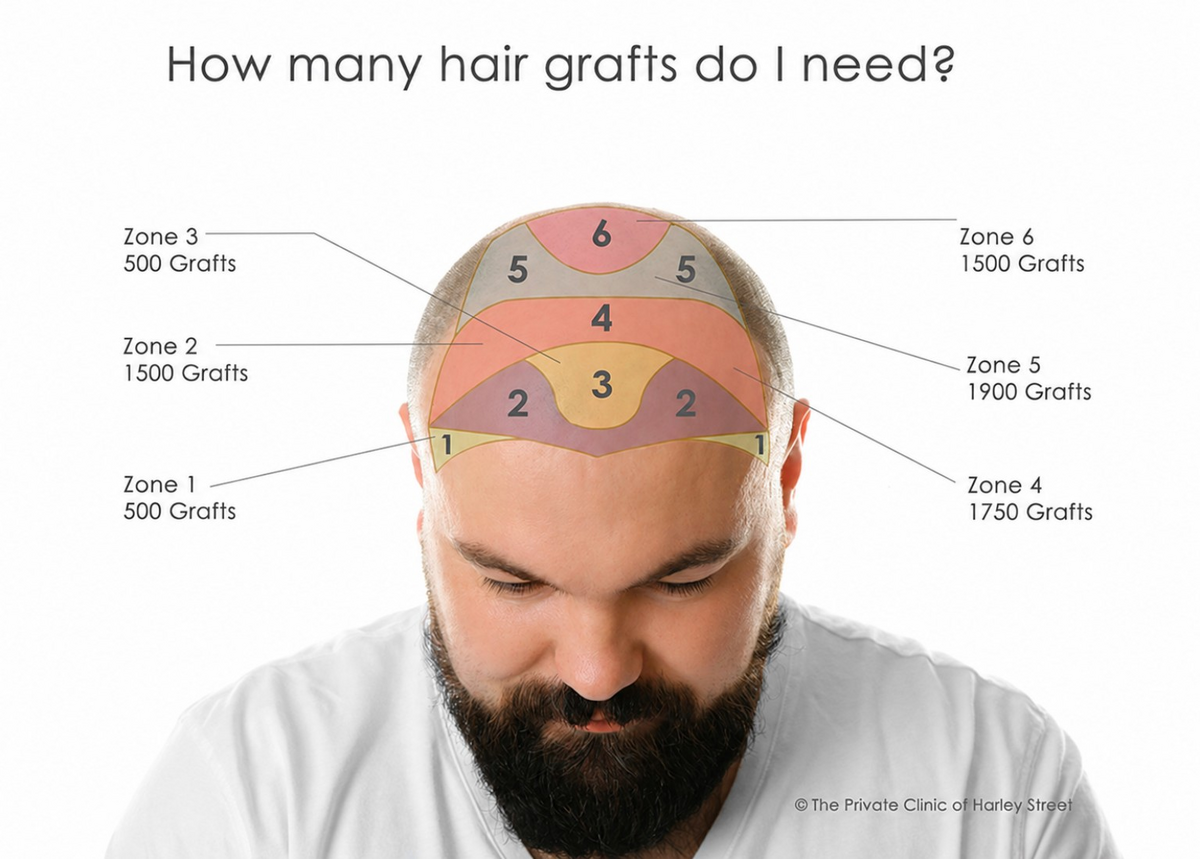
McFadden's reported 2,000 grafts and Boyd's reported 1,762 grafts describe their procedures. A patient with deeper temple recession, finer hair or a broader head may need more for a similar-looking goal. Somebody with strong coarse hair and a conservative design may need fewer. The guide to how many hair-transplant grafts you may need explains how the estimate is made.
Visible results do not reveal donor damage
Broadcast images concentrate on the hairline. They rarely show the donor area in comparable close-up lighting. A responsible assessment considers both. Creating more density at the front is not a success if the back and sides are overharvested or future options have been exhausted.
Young patients need a long plan
Androgenetic alopecia can begin during a playing career and continue for years. A low, dense hairline can look attractive at 25 but use a large share of donor hair. The surgeon has to consider what happens if the mid-scalp or crown later thins. Medication may be discussed for suitable patients, but it is not a guarantee that loss or post-transplant shedding will stop.
Publicity is not evidence of quality
A clinic can treat a famous player and still be the wrong clinic for another patient. Check who performs the surgical steps, whether the doctor is on the GMC register, how the Scottish treatment location is regulated, what aftercare is provided and whether the results shown are comparable to your pattern and hair type.
Hair transplant recovery around a football season
The end-of-season break may look like the obvious treatment window, but the calendar has to allow for more than visible scabs. Early grafts need protection from rubbing and impact. Heavy training raises heat, sweat and the chance of accidental contact. Heading a ball and match play carry risks that desk work does not.
Many patients look considerably more settled after the first two weeks, and light activity may restart in stages. Contact sport and high-intensity training can require longer. The treating surgeon should approve the return to each level; a professional player's medical team may also need to be involved. Do not book from an online promise that everybody can train after the same number of days.
Shedding is another timing issue. Many transplanted shafts fall during the early weeks before new growth becomes visible months later. That is cosmetic rather than a reason to stop training once the scalp has healed, but it can matter to somebody who is on camera every weekend. The hair transplant recovery guide covers work, exercise, washing and growth in detail.
How much might a footballer's hairline restoration cost?
There is no celebrity price band. A frontal procedure in the commonly reported 1,500–2,500-graft range is priced according to the clinic's current structure, the surgical plan and what the fee includes. Sponsorship or promotional arrangements can also make a public figure's quoted cost irrelevant to an ordinary patient.
Use the current Belfast hair transplant cost page for published clinic prices, then obtain a written individual quote after donor assessment.
Scottish footballer hair transplant FAQs
Which Scottish footballers have publicly documented hair transplants?
James McFadden, Kris Boyd, Leigh Griffiths, Anthony Stokes and Pat Nevin have public clinic accounts, campaign material or contemporary reports connecting them with treatment.
What about Barry Bannan, Steven Fletcher, Andy Webster and Colin Hendry?
They are commonly included in online discussions and lists. We have not treated appearance changes alone as clinical confirmation, because photographs cannot establish which treatment, if any, took place.
Did Wayne Rooney confirm his hair transplant?
Yes. Rooney confirmed it publicly on his own account in 2011. He is included because his announcement changed how the subject was discussed across British football, although he is not Scottish.
Why do footballers often choose FUE?
Short hairstyles make avoidance of a linear donor scar attractive. FUE still leaves small circular scars, and its suitability depends on donor density, graft requirements, healing and how short the hair will be worn.
When can a footballer train after a hair transplant?
There is no single return date for walking, gym work, heading and contact play. Activity is usually reintroduced in stages after early healing, with impact sport taking longer. The treating surgeon should give individual clearance.
Does being very fit prevent male-pattern hair loss?
No. Fitness and nutrition support general health, but they do not remove an inherited sensitivity to androgens in susceptible scalp follicles.